Introduction
When I first started planning my trip to Machu Picchu, the logistics felt overwhelming.
There were trains, buses, multiple towns in the Sacred Valley, different Machu Picchu circuits, and altitude concerns. But honestly, it’s one of those trips where once you actually do it, it all feels much more straightforward.
In this post, I’ll describe the specific logistics of getting from Cusco to Aguas Calientes, where to stay before visiting Machu Picchu, and how to get the bus up to the historical site to help you plan your own trip.
How to Get to Machu Picchu
If you’re visiting Machu Picchu without hiking, the route generally looks like this:
Flight → Cusco → Bus/Taxi → Ollantaytambo → Train → Aguas Calientes → Bus → Machu Picchu
You will need to:
- Fly into Cusco and take a private transfer or colectivo (shared minibus) to Ollantaytambo (approximately 1.5–2 hours from Cusco Airport).
- Take the train from Ollantaytambo to Aguas Calientes (approximately 1.5–2 hours).
- Take the shuttle bus from Aguas Calientes up to Machu Picchu (about a 30-minute ride)
Can You Go Directly from Cusco Airport to Aguas Calientes?
Yes, with a caveat.
If your primary goal is to visit Machu Picchu and you have limited time, you can travel directly from Cusco Airport to Aguas Calientes.
However, this option is only possible if your flight arrives in Cusco in the morning or early afternoon due to train schedules.
You can book this route through PeruRail or Inca Rail. The service is typically sold as a bimodal journey, meaning your ticket includes both bus and train transportation (staff will assist with the transfer, so you won’t need to navigate it on your own). You’ll travel by bus from Cusco to Ollantaytambo—or another designated station in the Sacred Valley—where you’ll transfer to a train bound for Aguas Calientes. Although a limited number of direct train services from Cusco are available, most travelers use the bimodal option. The total journey takes about 3.5 to 4.5 hours.
Note: The region offers much more than just Machu Picchu, with fascinating attractions such as the Moray Terraces and the Maras Salt Mines. You may also want time to acclimatize before visiting Machu Picchu. Consider spending a few nights in the Sacred Valley before continuing on to Aguas Calientes.
Stay in Cusco or the Sacred Valley?
If you’re flying into Cusco directly from Lima, it’s better not to stay overnight in Cusco right away due to the risk of altitude sickness. I recommend staying in the Sacred Valley (most towns here are at a lower altitude than Cusco) before going to Machu Picchu.
Cusco is absolutely worth exploring, but at 11,152 feet (3,399 meters), it can be challenging for travelers who are not yet acclimatized to the altitude.
Since many travelers return to Cusco to fly home, I recommend saving your time in the city for the end of your trip.
If you also want to visit Rainbow Mountain as part of your trip, the mountain is at an even higher altitude than Cusco, so you’ll definitely want to be well acclimatized before doing that hike.
Tours to Rainbow Mountain typically depart from Cusco.

My friend and I stayed in the Sacred Valley for our first two nights to acclimatize. To minimize time at high elevation, we asked our hotel to arrange a driver to pick us up directly from the Cusco airport so we could go straight to the Sacred Valley after landing. The drive took about an hour.
This costs more than taking a colectivo, but split between the two of us, it wasn’t bad (~$20 USD each). It was worth it for the peace of mind since it was both of our first times at altitude and we had no idea how we would react.
There are several towns you can base yourself in while exploring the Sacred Valley, including: Ollantaytambo, Urubamba, and Pisac.
We chose to stay in Urubamba and booked a room at Lizzy Wasi Urubamba, a lovely and affordable hotel surrounded by beautiful mountain scenery.

However, if I were planning this trip again, I would stay in Ollantaytambo instead.
While I really enjoyed Urubamba, staying overnight in Ollantaytambo would have simplified travel logistics.
Ollantaytambo is the main hub for trains to Aguas Calientes, and the train station is located right in town.
Because we stayed in Urubamba, we needed to arrange transportation to the Ollantaytambo train station. Our hotel helped us organize a driver, and the process was straightforward, but it did add an extra step.
How to Get to the Sacred Valley from Cusco
Both Urubamba and Ollantaytambo are accessible from Cusco by private transfer or by colectivo (shared minibus).
You can ask your accommodation to arrange a driver for you.
If you plan to take a colectivo, go to Calle Pavitos and look for white vehicles with destination signs on the dashboard. Tell the staff your destination and they will direct you to the correct vehicle. You pay the driver in cash when you reach your destination.
Because Ollantaytambo is the most popular base for visiting Machu Picchu, you’ll find more tourism infrastructure there, including a wider range of tour operators, restaurants, and accommodations.
If convenience is your top priority, I recommend staying in Ollantaytambo. If you’re looking for a quieter atmosphere, Urubamba is a great alternative. I enjoyed my stay in Urubamba—it felt calmer and less touristy, but it does come with the extra step of arranging transport to the Ollantaytambo train station.
Important Things to Know About the Train to Machu Picchu
You can book train tickets from Ollantaytambo to Machu Picchu through either PeruRail or Inca Rail. I used both companies during my trip and the experience felt very similar.
Baggage Policies
One thing my friend and I were stressed about before the trip was the luggage policy on the trains. We had read online that only one bag was allowed onboard. We were worried because we each had a carry-on-sized travel backpack plus a duffel bag.
In practice, we were both able to bring our two bags onboard without any issue. It didn’t seem like anyone was doing a bag check. But I don’t know how strictly baggage policies are enforced and whether we simply got lucky.
Aguas Calientes Is the Gateway Town to Machu Picchu

The train station you arrive at is called Machu Picchu Pueblo station. The station is located right next to the artisan market in Aguas Calientes, so you’ll need to navigate through a maze of souvenir stalls before emerging into the center of the city.
In Aguas Calientes, you’ll take the shuttle bus up to the actual Machu Picchu site.
Once you arrive in Aguas Calientes, you can either:
- stay overnight before visiting Machu Picchu the next morning
- or visit Machu Picchu the same day you arrive
My friend and I chose to stay overnight because we didn’t think we could realistically coordinate train arrival times, bus lines, and fixed Machu Picchu entry times all in one day.
Buy Bus Tickets Ahead of Time and Give Yourself Extra Buffer
The buses from Aguas Calientes up to Machu Picchu are operated by Consettur.
You can buy bus tickets in person in Aguas Calientes (you have to go to Consettur to buy them. You can’t buy directly from the bus driver). Or you can buy them online.
If you plan to purchase bus tickets in person, you should go well in advance of your Machu Picchu entry time so you’re not spending time on the day of your visit waiting in line to buy bus tickets.
Even though buses from Aguas Calientes to Machu Picchu run frequently, the lines can still get extremely long. In our case, it took about 30–40 minutes just to board a bus (and we were told November wasn’t even peak season). The ride itself was about 30 minutes up the mountain.
Once you arrive at Machu Picchu, there can also be long lines at the entrance. We waited about 10–15 minutes before being able to enter the site.
We were honestly worried that we might miss our timed entry slot because of the wait to buy bus tickets, the long bus line, and the entrance queue. If you bought your bus ticket ahead of time, you can at least eliminate one of those delays.
Luckily, our guide helped us find a shorter line at the entrance to Machu Picchu and got us in — even though we arrived later than our entry time.
And don’t forget—you’ll need your passport and your entry ticket to get into Machu Picchu.
Machu Picchu Circuits: Book Early or Your Preferred Route May Be Sold Out
Machu Picchu uses a circuit system to help preserve the site and manage visitor flow.
You have to select a specific circuit when booking your ticket to Machu Picchu, and each circuit has a limited number of entries per day.
There are three main circuits, each with different routes and viewpoints:
- Circuit 1: Panoramic Route
- Circuit 2: Classic Route (the most complete view of the main ruins)
- Circuit 3: Royal Route
It’s worth booking these tickets early.
We booked our tickets about 1.5 months in advance of our trip, and Circuit 2 (the circuit we wanted) was already sold out for our planned travel dates.
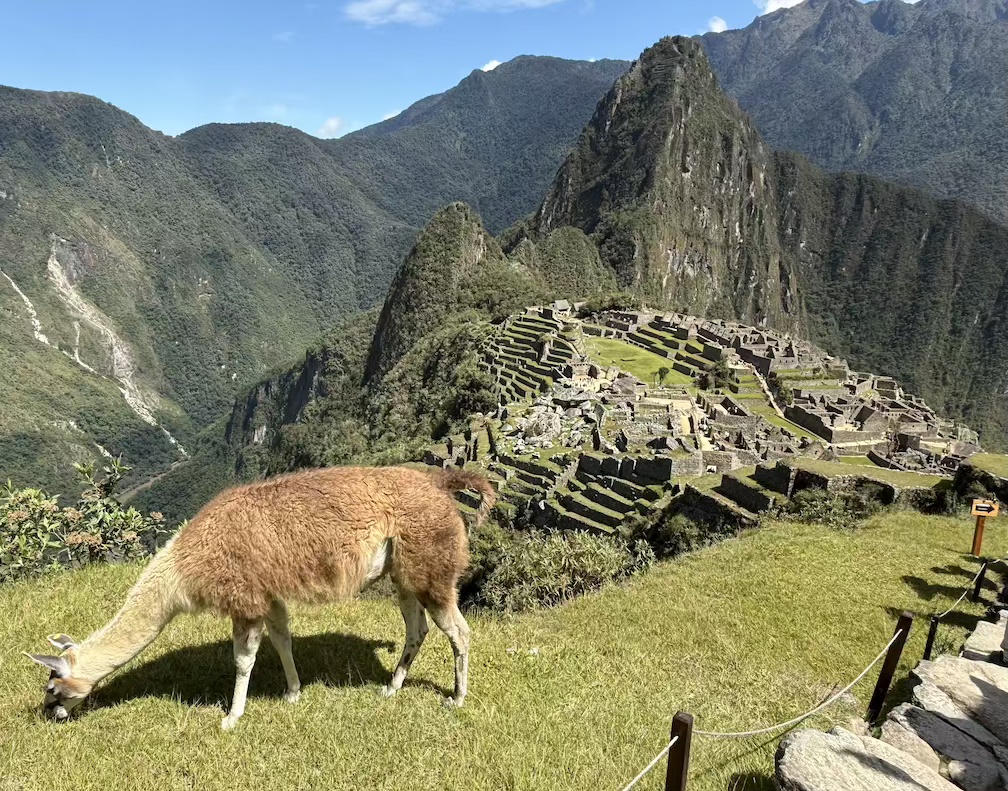
We went with Circuit 1 (the panoramic route) instead, which did give us that classic postcard view of Machu Picchu from above. I’m glad we ended up with that route.
But if there’s a specific circuit you really want, book as early as possible. You can also visit multiple circuits on the same day at different time slots or on different days.
A Note About the Official Ticket Website
The official government website for buying the Machu Picchu circuit tickets is not user-friendly.
I tried using the English-translated version of the website to book my ticket, but the website didn’t work properly with the translation.
I had to use the Spanish version of the site and managed to book my ticket. But even then, the website was glitchy, and I had to try multiple times.
We did successfully get our tickets through the official website, but I’ll be honest: it was frustrating at times. If you encounter glitching on the website, just keep trying.
Do You Need a Guide at Machu Picchu? (And Why I Recommend One)
Officially, Machu Picchu regulations require visitors to enter with a licensed guide. This is to ensure that visitors are following the right circuit paths. But this policy wasn’t strictly enforced.
But honestly, I would 100% recommend getting a guide, regardless of whether guides are required or not.
For me, the guide completely transformed my experience at Machu Picchu.
Without a guide, I probably would have walked away only thinking, “this is a beautiful site.”
But having a knowledgeable guide explain the historical context of Machu Picchu helped me understand the significance of the ruins and how technologically advanced the Inca civilization really was. It made the ruins feel alive, rather than just pretty scenery.
Our guide explained things like:
- How the Incas engineered the city
- How different sections of the site were used
- Why the site was abandoned
- The historical significance of Machu Picchu
- The Inca civilization
- How the site was rediscovered
It shifted my perspective from: “this place looks amazing” to “I understand why this place matters for human history.”
That shift in perspective made my visit far more meaningful and compelling.
Machu Picchu is undeniably beautiful with the Andes mountains in the background, but understanding the human history behind it gave me a deeper appreciation that stayed with me long after leaving.
Altitude Sickness and Acclimatization
Altitude affects everyone differently—some people feel completely fine, while others struggle.
I personally chose to take Diamox to help with acclimatization. One of the side effects I had was a mild tingling sensation in my fingers and toes, but overall, I tolerated the medication well.
I’m glad I took Diamox because I had moments where my heart would race when walking quickly or uphill—even in Urubamba, which is lower in altitude than Cusco. I likely would have felt the effects of altitude more strongly without Diamox. After a few days, I acclimatized and felt completely normal by the end of the trip.
That said, Diamox isn’t for everyone. My friend didn’t take it. She had a racing heart the first night in Urumbamba, but after that night, she felt totally fine for the rest of the trip.
The reality is you really don’t know how your body will react until you’re there.
Final Thoughts
Planning Machu Picchu felt intimidating because the logistics sounded more complicated than they actually were.
But it’s actually fairly straightforward. It seems like a lot of moving pieces, but the basic route is:
Flight → Cusco →Bus/Taxi → Ollantaytambo → Train → Aguas Calientes → Bus → Machu Picchu
For me, the biggest lessons were:
- Book the circuits early
- Don’t underestimate how much a good guide can add to the experience
- Give yourself more buffer time than you think you’ll need before your entry time at Machu Picchu


