Introduction
The Amalfi Coast isn’t difficult to reach, but it does require a bit of planning. Unlike other destinations, you can’t fly directly into towns like Positano or Amalfi.
Most visitors arrive in Naples, Salerno, or Rome and then continue to the Amalfi Coast by ferry or bus.
In this guide, I’ll explain how to get to the Amalfi Coast from major Italian cities without a car, and the best ways to travel between towns once you’re there.
Quick Answer: What’s the Best Way to Get to the Amalfi Coast?
Flying into Naples? Ferry or shuttle bus.
Coming from Rome? Train to Salerno, then ferry.
Getting to the Amalfi Coast from Naples
Option 1: Pintour Shuttle Bus
There is an affordable shuttle bus operated by Pintour (about €20) that goes directly from Naples Airport to the town of Amalfi.
Option 2: Ferry
From April to October, ferries connect the port of Naples with both Amalfi and Positano.
You can purchase ferry tickets online through DirectFerries or directly at the port.
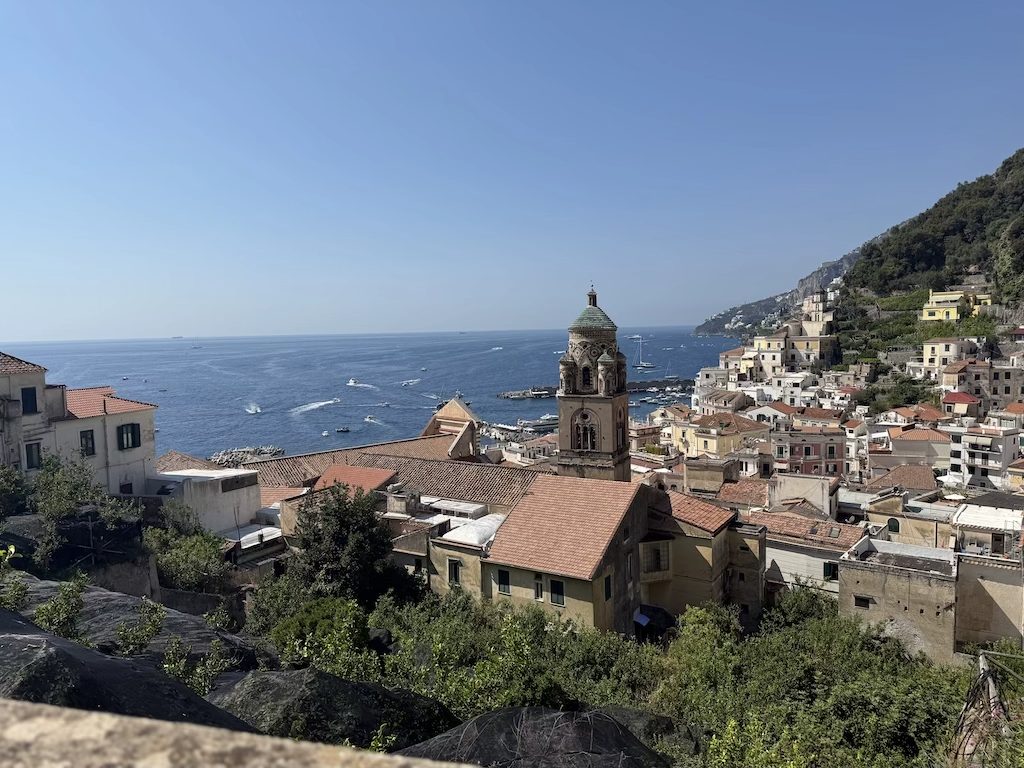
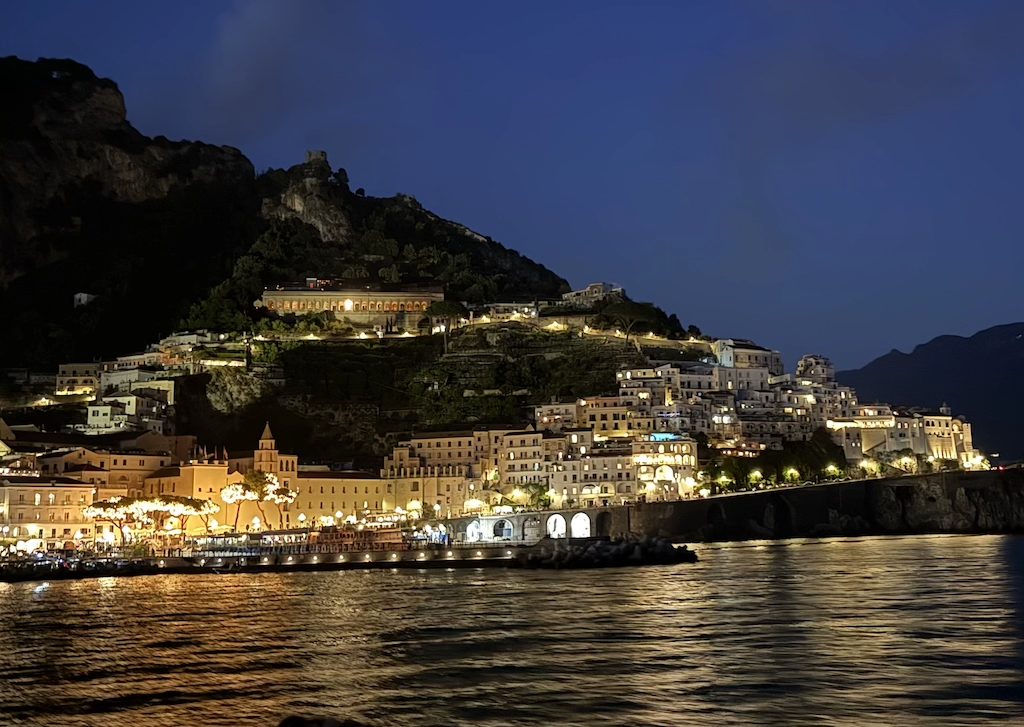
The ferry is one of the most scenic options.
Option 3: Airport Transfer
If you want the easiest door-to-door option, you can also book a private transfer from Naples Airport to either Amalfi or Positano.
You can find private transfers through GetYourGuide or Viator.
This is the most expensive option but requires the least amount of coordination.
Getting from Salerno to the Amalfi Coast
If you’re in Salerno, this is the fastest way to reach the Amalfi Coast.
Option 1: Ferry (My Recommended Option)
Head to the Salerno port and take a ferry to either Amalfi or Positano. Tickets can be purchased at the port, but you can also purchase them in advance through DirectFerries.
This is the option my friend and I chose because it was the fastest, easiest, and most convenient option.


The view from the ferry is incredible.
Option 2: Local Bus
You can also take the SITA Sud bus (Route 5120) from Salerno to Amalfi. Buses depart from stops near Salerno Centrale train station, making this a convenient option if you’re arriving by train.
The journey takes approximately 1 to 1.5 hours, depending on traffic.
This route offers incredible views of colorful villages perched on dramatic cliffs. However, the road is very winding, so if you’re prone to motion sickness, you’ll want to plan accordingly.
Buses can also become crowded during peak tourist season. If you’re traveling with bulky or heavy luggage, keep in mind that you may not get a seat and could end up standing the entire journey.
While the bus is the more budget-friendly option, the ferry may be worth the extra cost if you want convenience, comfort, and not having to navigate a crowded bus with luggage.
I took both the bus and the ferry, and honestly, each offers a different view of the Amalfi Coast. The ferry provides stunning views of the coastline, while the bus lets you experience the villages, cliffs, and hairpin turns up close.
Getting from Rome to the Amalfi Coast
You can get to the Amalfi Coast from Rome via Salerno.
You must first travel from Rome to Salerno. Once you’re in Salerno, choose one of the transportation options described above to reach Amalfi or Positano.
You can get from Rome to Salerno by train, which is the fastest option. You can buy tickets directly at the train station or book online through Omio.
If you’re looking to save money, buses are usually cheaper. FlixBus and Itabus both operate routes between Rome and Salerno.
Transportation Between Amalfi Coast Towns
Amalfi to Positano
During the tourist season, frequent ferries connect Amalfi and Positano, with crossings typically taking 15–30 minutes, depending on the operator and any intermediate stops. There is also a local SITA Sud bus (Route 5070) connecting the two towns, with a journey time of approximately 30–40 minutes, depending on traffic. This makes it easy to stay in one town and visit the other on a day trip.
We stayed in Amalfi and took the ferry to Positano for the day, which was both convenient and a great way to enjoy the coastal scenery.
Amalfi to Ravello
Ravello is a really easy day trip and offers some of the most spectacular views in the region.

There are frequent local SITA buses from Amalfi to Ravello, and the journey takes around 25–30 minutes.
Bus tickets can’t be purchased on board. When I visited in the summer, there was a tourist information stand in the main square of Amalfi. I asked for directions on where to buy SITA bus tickets and was directed to a representative selling tickets right next to the square.
There is also a seasonal shuttle operating between Amalfi and Ravello that ran directly without any intermediate stops (the local buses make additional stops along the way). It was slightly more expensive, but not by much—when I visited, it cost about €10 each way.
The road to Ravello is steep, winding, and bumpy. I definitely felt a bit nauseous on that bus, so if you’re prone to motion sickness, you may want to take medication beforehand.
If you’re staying in Positano, you’ll first need to travel to Amalfi before catching the bus or shuttle to Ravello.
Amalfi and Positano to Other Towns
Visiting towns such as Praiano, Minori, Maiori, or Atrani is easy using the local SITA bus network.
Google Maps worked surprisingly well for navigating public transportation while I was there.
If you’d rather not deal with transportation logistics, there are also plenty of day tours available.
Should You Rent a Car on the Amalfi Coast?
It depends on how much of the Amalfi Coast you want to see and how comfortable you are driving on very narrow roads that wind along dramatic seaside cliffs.
Personally, I didn’t rent a car because I had no interest in driving on those narrow roads. The ferries and buses got me everywhere I wanted to go on the Amalfi coast.
That said, if you’re comfortable driving and want maximum flexibility, renting a car can be a great option. You won’t be tied to ferry or bus schedules, and you’ll have an easier time visiting some of the smaller, less touristy towns that are harder to reach by public transportation. A car also gives you the freedom to stop at scenic viewpoints along the coastal road.
You can rent a car in Naples, Salerno, or Rome and drive directly to the Amalfi Coast as part of a larger Italian road trip.
The biggest downside is parking. Parking can be expensive and limited, especially in popular towns like Positano and Amalfi during the summer months. Make sure your accommodation offers parking if you’re planning to bring a car.
If flexibility is your top priority, a rental car is worth considering. If you’d rather avoid the stress of driving and parking, the ferry and bus network is more than enough to explore the coast.
Final Thoughts
The Amalfi Coast is easy to get to without a car.
It sounds like a lot of steps when you’re planning it out, but it’s actually very straightforward. Tourism is a huge part of the region, so the transportation infrastructure is well established and easy to navigate.